Seneca Meadows and the Communities Paying the Price for New York’s Garbage
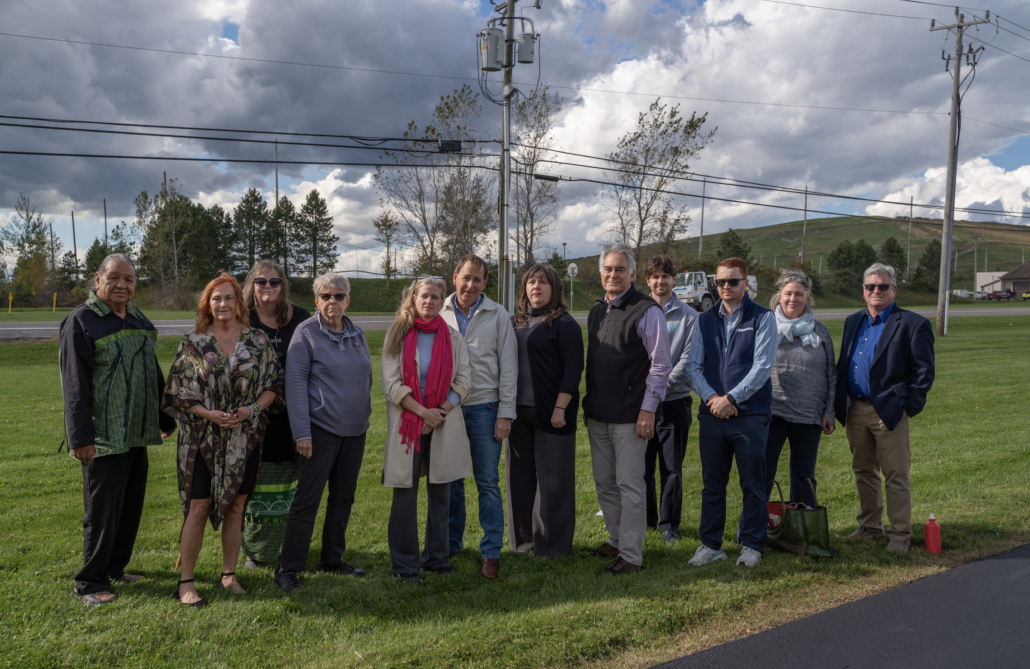
 

Sachem Sam George of the Gayogohó:nǫ (Cayuga) Nation; Yvonne Taylor, Co-Founder and Vice President of Seneca Lake Guardian; Debbie George, wife of Chief Sam George; Beth Gallagher, Assemblymember Emily Gallagher’s mother; Assemblymember Anna Kelles; Doug Avery, former Member of the Seneca Falls Town Board; Assemblymember Emily Gallagher; Assemblymember Al Stirpe; Jackson Marko, Legislative Coordinator; Mark Pitifer, Marketing & Communications Administrator, Government & Public Relations at Waterloo Container; Rebecca Martin, New York River Watch; Joseph Campbell, Co-Founder and President of Seneca Lake Guardian. Seneca Meadows in the background


By Rebecca Martin, New York River Watch

Click the links throughout the post to watch video footage from the site.

Last week, I traveled 224 miles from my home in Kingston, NY to Seneca Falls and Waterloo to tour Seneca Meadows Landfill, organized by our partners at Seneca Lake Guardian. As co-founder and lead organizer of New York River Watch, I wanted to see firsthand the landfill at the center of so many concerns  about waste, pollution, and public health in New York State. What I saw, and what we heard from the people who live and work nearby, reinforced why this issue matters far beyond the Finger Lakes.

Seneca Meadows is New York State’s largest active landfill, but the word landfill hardly conveys its scale. The site spans 2,600 acres, including nearly 400 acres of landfill, and rises roughly 300 feet above the surrounding landscape. From a distance, its towering mass looks more like a mountain range than a garbage dump.
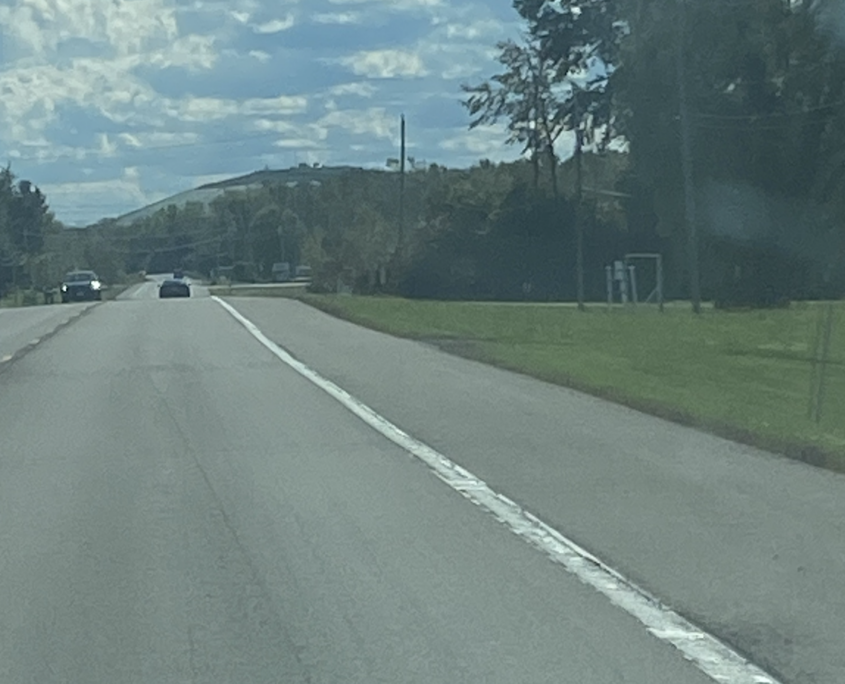
 

Driving toward Seneca Meadows Landfill after exiting the highway. With Waste Connections’ billion-dollar profits, they can make a mountain of garbage look almost like a natural mountain. But the stench gives it away.


Waste disposal at the site dates back to 1958, when it operated as a local dump. In 1983, it became Seneca Meadows, marking the beginning of the operation we know today.

Owned by Waste Connections, Seneca Meadows accepts approximately 6,000 tons of garbage daily from about 47 New York counties, as well as other states and Canada. A substantial amount comes from New York City. Communities hundreds of miles away, including my own in Ulster County, send their waste here.

The 16,000 people who live in Seneca Falls and Waterloo, NY, are left to bear the consequences of a waste system that sends garbage from across the state to their doorstep, turning their communities into sacrifice zones for everyone else’s convenience.

The landfill’s footprint is enormous, but its impacts extend well beyond its boundaries. Homes, businesses, schools, and historic sites sit nearby. Lafayette Intermediate School is approximately half a mile away as the crow flies, and six school buildings in the Waterloo and Seneca Falls school districts are within three miles, according to information shared during our tour.
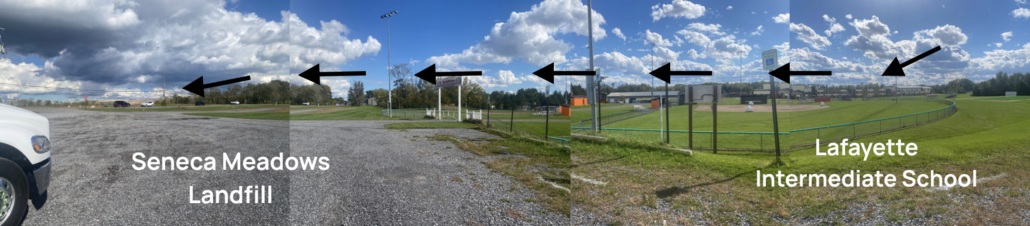


We also learned that Waste Connections had purchased many homes around the landfills perimeter.  
Some stood abandoned; others remained occupied by people living with its daily impacts, likely not having any options. For families who may have lived here for generations, losing a home can mean losing a piece of their family history, their community, and their way of life. When Waste Connections buys their homes, residents who remain may find themselves in a more vulnerable position, living in homes they no longer own while the company that owns them has a direct stake in local decisions. That shift in power may make residents less willing to speak out at Town Hall about the impacts of the landfill on their lives, and their community.

There is a certain shrewdness in buying properties after a landfill has diminished their value, especially for a corporation that reported more than $1 billion in net income in 2025.

Seneca Meadows’ permit was set to expire at the end of 2025. Waste Connections has applied for a 15-year expansion, known as the “valley infill” project, that would allow the landfill to continue operating through 2040. But that timeline may be far longer. The 15-year clock would not begin until new permits are issued, if they are issued at all. That could mean Seneca Meadows continues operating until 2050 or beyond.  

Or until it reaches capacity. During my afternoon visit, truck traffic into the landfill seemed surprisingly light. Community members told us the company was limiting truckloads to slow the landfill’s approach to capacity while awaiting a permit decision.

Meanwhile, the NYS Department of Environmental Conservation has not released the environmental impact statement for public comment, leaving the community in limbo while the expansion review continues. The proposal has drawn strong opposition from community members and environmental groups, including our allies at Seneca Lake Guardian.

Living in the shadow of a landfill

Community members described persistent odors and concerns about air quality. Nearby businesses have reported difficulties attracting and retaining employees because of the smell. I experienced it firsthand as I drove around Seneca Falls and Waterloo, on my way to the sewage treatment plant and the community center where a town hall would be held.

Like hitting a warm current in a cold lake, the stench would find me without warning, filling the air before receding as I drove on. I began to notice where it struck: beside homes, along farmland, near playgrounds. And then there was the landfill’s perimeter misting system, spraying an odor-control product into the air in an apparent attempt to mask the stench, while likely adding to the ghastly soup of chemicals in the air.

Even with a steady breeze, the smell was overpowering near the leachate holding tanks. More than a million gallons of “garbage water” sat in these tanks waiting to be trucked away. Just beyond them stood a willow tree, a quiet remnant of the landscape that existed before Seneca Meadows opened in the 80’s. The willow stood as a reminder of the natural landscape that the landfill replaced.

I grew up in a Maine mill town where the paper mill’s stench hung over the community day after day. People called it “the smell of money,” as if the jobs justified the pollution. Driving through Seneca Falls and Waterloo, I thought about that phrase differently. Seneca Meadows employs an estimated 100–160 people while taking communities’ garbage from across the state and beyond for profit. As horrible as my hometown’s paper mill was, it employed thousands of families. Neither industry has a license to pollute, but the economic benefits are hardly comparable to the burden. What has Waste Connections actually brought these communities to justify decades of living with a mega-landfill?

An educational center where no-one goes!

The public health concerns go far beyond odor. From 2019 to 2023, Seneca County’s age-adjusted lung cancer incidence rate was 70.7 cases per 100,000 people per year, about 36% higher than the national rate. A separate state review also found elevated lung cancer diagnoses in specific census tracts in Seneca Falls and Waterloo over a 26-year period.  

We need a different approach to waste

“Out of sight, out of mind” has become New York’s waste management strategy. We send our garbage elsewhere and leave other communities to live with the consequences. Massive landfills like Seneca Meadows and Colonie in New York State are not solutions; they are symptoms of a failed system.

If we all spent a week living beside a large garbage dump like Seneca Meadows and experiencing its scale, the stench, and the losses borne by the surrounding community, we might stop treating mega-landfills as an acceptable solution to our waste.

We need mandated zero-waste planning backed by dedicated funding for coordinated implementation. Above all, local governments, businesses, and community members must work together to reduce its waste, expand reuse and recycling, and make landfills, when necessary, the absolute last resort.


TAKE ACTION

  1. Sign up for Seneca Lake Guardian’s mailing list. Sign up for Seneca Lake Guardian’s mailing list now so you’re ready when public comment opens on Waste Connections’ proposed expansion of Seneca Meadows. They will make it easy to personalize and submit a comment. We need thousands of voices saying: No more mega-landfills. Close Seneca Meadows.  
  2. Tell your state legislators to implement New York’s Zero Waste Plan. New York adopted its 2023–2032 Solid Waste Management Plan, but a plan on paper means little without action. Urge your New York State senators and assemblymembers to prioritize waste reduction, reuse, recycling, and composting—and stop expanding our dependence on landfills and incineration.
  3. Visit New York River Watch’s Leachate Loophole campaign. Learn how landfill leachate threatens our waterways and drinking water, and find out how you can take action to close the loophole.


NY Assemblymembers Gallagher, Kelles, and Stirpe Tour Seneca Meadows as Community Calls on State to Reject Landfill Expansion


Rebecca Martin joined our partners at Seneca Lake Guardian for a tour of Seneca Meadows Landfill, where we heard directly from impacted community members and local business owners about the landfill’s effects on their community. We’re sharing the following press release from Seneca Lake Guardian, and will share our own reflections and photos from the day shortly.

###

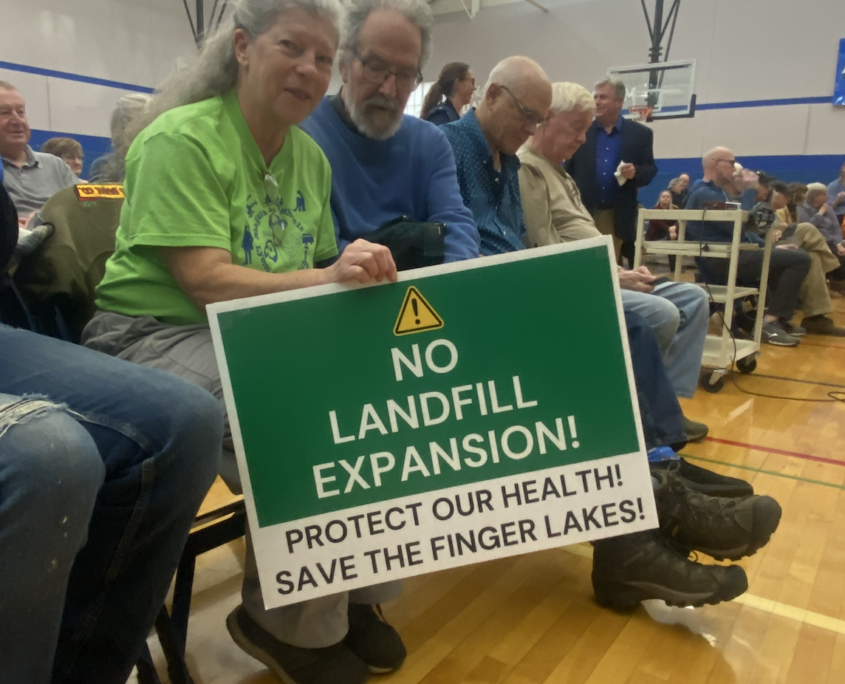
SENECA FALLS, NEW YORK — Last night, New York State Assemblymembers Emily Gallagher and Anna Kelles joined Seneca Lake Guardian, local residents, business owners, and community leaders in Seneca Falls for a community town hall focused on the future of the Seneca Meadows, Inc. landfill (SMI) and its proposed expansion. Over 100 residents packed the Seneca Falls Community Center to share stories about life in the shadow of New York’s largest landfill and call for change.

Ahead of the town hall, Gallagher and Kelles were joined by Assemblymember Al Stirpe for a tour of the area surrounding Seneca Meadows, New York’s largest landfill, to see its impact on neighboring communities firsthand. The lawmakers also met with local stakeholders to hear directly about their experiences living and working near the landfill, and their concerns about its continued operation.

“For too long, waste management policy in New York has overburdened communities like Seneca Falls, blowing past our reduction targets instead of seriously committing to more sustainable practices,” said Assemblymember Emily Gallagher. “As the Chair of the Committee on Solid Waste Management, I’m grateful to the advocates, business owners, and community members who shared their experiences with me. It’s clear that approving the extension of Seneca Meadows landfill would only move us in the wrong direction — we must shut down SMI once and for all and commit to waste reduction and diversion policies like PRRIA to change our state’s trajectory and avoid the impending solid waste crisis we’re facing.”

“Residents were clear: living in the shadow of New York’s largest landfill is dangerous and damaging. They described the effects on the air they breathe, the water they drink, and students’ ability to focus in class and enjoy time outside,” said Assemblymember Anna Kelles. “The state’s own review of health around the landfill found 51% more lung cancer cases than expected among men and 44% more among women in one nearby area. In a survey of people living within 10 miles, about one in four said someone in their household had been diagnosed with asthma or another respiratory illness since living near the landfill, and about one in four reported a household diagnosis of cancer or heart disease. The DEC must take these findings and the community’s concerns seriously and reject Seneca Meadows’ proposed expansion. I am proud to stand with the Finger Lakes community in calling for bold action to shut down the landfill and adopt more sustainable waste management practices,”

“The DEC has ignored Seneca Falls’ small business owners, who are struggling to retain employees and attract customers because of the sight and smell of the landfill, for too long. As the Chair of the Committee on Economic Development, I know that small businesses – from winemakers to auto dealers – across the region are already under immense pressure from rising costs,” said Assemblymember Al Stirpe. “Expanding the Seneca Meadows landfill may be the final straw for the small businesses that form the bedrock of this community.”

The visit comes as the New York State Department of Environmental Conservation reviews Seneca Meadows’ proposal to expand its footprint by 47 acres and continue operations through at least 2050. Residents and advocates raised concerns about what decades of additional landfilling could mean for public health, air and water quality, quality of life for the community, and the Finger Lakes’ agriculture and tourism-driven economy.

At the evening town hall at the Seneca Falls Community Center, Gallagher and Kelles heard from a panel of residents, business owners, health experts and advocates about the effects of living and working near the landfill, including Yvonne Taylor of Seneca Lake Guardian, Mark Pitifer representing Waterloo Container, Sachem Sam George, Member of the Haudenoshonee Nation, Doug Avery, a former Town Board Member, Michelle Grillone, a parent in the local school system, and Vinny Aliperti, the owner of Billsboro Winery. Concerns ranged from odors and truck traffic to potential impacts on water quality, public health, and the region’s economy. Community members also had the opportunity to ask questions and share their own experiences.

In keeping with the event’s focus on protecting the Finger Lakes from the impacts of waste, Seneca Lake Guardian partnered with Dish Truck to provide reusable plates and cups for food and drinks served at the town hall, helping ensure the event itself does not contribute additional waste to the landfill.

Seneca Meadows is New York’s largest landfill and is likely the state’s largest single point source of methane emissions. The landfill generates up to 200,000 gallons of leachate each day containing PFAS, or “forever chemicals,” which is transported to wastewater treatment facilities across New York that generally are not equipped to remove PFAS before treated water is discharged into waterways. Locally, a recent survey of more than 700 residents documented widespread health and quality-of-life concerns, with nearby residents reporting headaches, breathing issues, dizziness, and irritation associated with landfill odor events. The area surrounding the landfill has also been identified as a lung cancer cluster.

“The Finger Lakes are not New York’s dumping ground,” said Yvonne Taylor, Co-Founder and Vice President of Seneca Lake Guardian. “Families here have lived with threats to our water and health long enough. Today, our elected leaders from across the State saw firsthand what this community stands to lose if Seneca Meadows is allowed to grow even larger. Enough is enough. Our homes and our future are worth more than another 25 years of garbage.”

“Working people deserve clean air, clean water, and a healthy place to live, work, and raise their families,” said Todd Hobler, Executive Vice President of 1199SEIU. “The communities around Seneca Meadows have carried the burden of New York’s waste for long enough. We stand with Finger Lakes residents calling on the state to protect their health and their future and reject the landfill’s expansion.”

“I work directly across from the Seneca Meadows landfill every single day, and I have witnessed firsthand the growing impact this facility has on the people and businesses of Seneca Falls. Over the years, the odors have become increasingly severe, truck traffic has intensified, and concerns surrounding emissions have only grown,” said Mark Pitifer, Marketing & Communications Administrator, Government & Public Relations at Waterloo Container. “From where we sit, it is clear that Waste Connections has not demonstrated an ability to adequately control the impacts of its existing operation. Yet it is our employees, neighboring businesses, homeowners, and the broader community who are forced to live with the consequences. Against that reality, the prospect of the New York State Department of Environmental Conservation extending the life of this landfill—and potentially authorizing an expansion of an already enormous industrial footprint—is deeply troubling. Before any discussion of expansion can even be considered, the serious and persistent problems associated with the facility as it operates today must be addressed. Seneca Falls should not be asked to accept decades more of these impacts simply because they have been tolerated for decades already.”

“The Haudenosaunee views Mother Earth as a living relative rather than a resource, carrying a sacred obligation to preserve the land, water, and all living things in reciprocal balance. Therefore we all have a responsibility to protect our environment, air, and water, and preserve the land and its environment for the faces to yet be seen. Every decision made today must ensure the water, air, and land remain healthy for seven generations into the future. Seneca Meadows puts all of that at risk. From the 200,000 gallons of polluted leachate produced everyday to the massive volume of methane emissions the landfill pumps into the atmosphere, we are calling on the State to stand with us to protect the Finger Lakes and New York’s environment at large. Denying SMI’s expansion and shutting down the landfill is a matter of life and death,” said Sachem Sam George of the Gayogohó:nǫ (Cayuga) Nation. 

“As a former member of the Seneca Falls Town Board and a longtime Seneca Falls resident, I’ve seen our community fight for its dignity, only to be pushed aside to protect Seneca Meadows’ profits. It is time for the DEC to listen to the people of Seneca Falls and the countless advocates, residents, neighboring towns and counties, elected officials, business owners, and institutions who have called for the immediate closure of Seneca Meadows. I’m grateful to Assemblymembers Gallagher, Kelles, and Stirpe for taking the time to hear from our community and discuss the best course of action,” said Doug Avery, former Member of the Seneca Falls Town Board.  

“The emissions and odors coming from Seneca Meadows landfill leave my children feeling dizzy, nauseous, and disgusted, preventing them from going to school or enjoying outside activities,” said Michelle Grillone, lifelong resident and mother of three children. “We deserve better. It is the State’s responsibility to protect our health and our environment, and today, they are failing. We demand decisive action from the Department of Environmental Conservation to shut down Seneca Meadows and allow all of our children to live safely and freely.”

“As a local winemaker and business owner, my livelihood depends on the health of our air, climate, soil and waterways – and a steady stream of tourists visiting the Finger Lakes to enjoy its natural beauty. Expanding Seneca Meadows landfill by 47-acres threatens to cut off my customer base, as tourists start to see Seneca Falls the same way New York State seemingly does – as a trash dump,” said Vinny Aliperti, owner of Billsboro Winery.

“Today, we heard a story that is all too common across this state: a community’s voice being pushed aside by the special interests of a polluter. The residents, advocates, and business owners of Seneca Falls have been forced to fight for their basic rights: clean air, clear water, and a healthy environment. The state must do the right thing by denying the proposed expansion and immediately closing Seneca Meadows to finally deliver the long-overdue justice Seneca Falls deserves,” said Rebecca Martin, Director of Community Partnerships and Training at Beyond Plastics and Co-founder of New York River Watch.

###

About Seneca Lake Guardian. Seneca Lake Guardian is a New York State not-for-profit Corporation with 501(c)(3) and is dedicated to preserving and protecting the health of the Finger Lakes, its residents and visitors, its rural community character, and its agricultural and tourist related businesses through public education, citizen participation, engagement with decision makers, and networking with like-minded organizations.

The Comment Period on Leachate Management Regulations Is Over. The Work Continues.

The public comment period for New York’s proposed landfill leachate regulations ended on September 9, but our work is far from over, and we are here for all of it.

More than 100 organizations joined New York River Watch’s coalition comment letter, and more than 700 individuals submitted comments urging the New York State Department of Environmental Conservation (DEC) to strengthen its proposed regulations governing the management and treatment of landfill leachate.

We are also working to obtain and review the comments that were submitted and the September 2 public hearing so that the full public record is available.

DEC now has up to a year to consider the comments it received before issuing a final rule or developing a new proposal. Learn more about the rulemaking process.

In the meantime, we will continue to connect the dots.

Leachate is part of a much bigger picture

Landfill leachate is not an isolated waste issue. It connects landfills to sewage treatment plants, rivers, lakes and drinking water sources, PFAS contamination, sewage sludge, air pollution, climate change, and the larger question of how much waste New York continues to bury.

And we are seeing these connections play out at both the state and federal levels.

A recent Waste Dive report documents pushback from landfill operators, including Casella Waste Systems and Waste Management, against New York’s proposed leachate treatment requirements.

Read the Waste Dive report on industry pushback.

At the federal level, the EPA recently withdrew guidance that provided state permitting authorities with standard language for addressing PFAS through wastewater permits. The guidance was nonbinding, so its rescission does not itself eliminate a legal requirement. But its withdrawal creates additional uncertainty around PFAS regulation and gives states less federal direction at a time when strong action is needed.

Read the Waste Dive report on the EPA’s PFAS wastewater permitting guidance.

The federal regulatory picture is changing, and that makes action at the state level all the more important. New York has the authority and the opportunity to strengthen protections for its waters, regardless of what happens in Washington.

There is more we can do

While we wait for DEC to complete its review, there are concrete ways to keep moving forward. We have gathered current actions from our coalition partners on our Take Action page, and we will continue adding to it as new opportunities arise. Some of them include:

_________________________________________________________________________

URGE GOVERNOR HOCHUL TO SIGN TWO PFAS BILLS

The New York State Legislature has passed two bills that would strengthen protections against PFAS, and both are awaiting the Governor’s signature.

One would establish state limits for PFAS in drinking water as federal protections are being rolled back. The other, the PFAS Discharge Disclosure Act, would require sewage treatment plants to test for PFAS and make the results publicly available. Because landfill leachate can contain extremely high concentrations of PFAS, this information is important to understanding what is entering New York’s rivers and lakes.

Riverkeeper is working to protect the Hudson River and drinking water from PFAS and other pollution, including the impacts of landfill leachate.

_________________________________________________________________________

SUPPORT EFFORTS TO REDUCE RELIANCE ON MEGA-LANDFILLS

Stronger treatment and regulation of PFAS-contaminated landfill leachate are critical, but protecting New York’s waters also means reducing the amount of waste going into the massive landfills generating contaminated leachate.

Seneca Meadows, New York’s largest landfill, generates up to 200,000 gallons of leachate per day and is seeking a 47-acre, seven-story expansion that could allow it to continue operating through at least 2050. Rather than expanding mega-landfills, New York should follow through on its commitments to waste reduction, reuse, recycling, composting, and other zero-waste solutions that make landfills a last resort.

Seneca Lake Guardian is leading the fight to close Seneca Meadows and move New York away from landfilling statewide. Join their mailing list for updates and ways to help.

_________________________________________________________________________

SUPPORT STRONG LANDFILL AIR REGULATIONS

DEC is also considering new regulations governing landfill gas emissions. People living near landfills are exposed to dangerous air pollution every day, while methane emissions from landfills are a major contributor to climate change.

Full Circle Future is working to strengthen New York’s regulations governing landfill air emissions, including methane and other pollutants that affect nearby communities and contribute to climate change.

Tell New York regulators that you support strong landfill air regulations

_________________________________________________________________________

KEEP SEWAGE SLUDGE OUT OF CONSUMER PRODUCTS

When leachate passes through sewage treatment plants, some toxic chemicals can end up in the sewage sludge produced by those facilities. Sewage sludge is used to produce potting soil, compost, and fertilizer, meaning contaminants can ultimately end up in products used on lawns and gardens.

Just Zero is working to end the practice of spreading toxic, PFAS-contaminated sewage sludge on agricultural fields and advocates for a complete ban on using wastewater solids as farm fertilizer.

Sign Just Zero’s petition calling on big-box garden centers to stop selling products made with sewage sludge.

_________________________________________________________________________

Connecting the dots—and staying together

These issues are connected. What happens at a landfill does not stay at the landfill. Contaminants can move through leachate, sewage treatment systems, sludge, rivers, lakes, groundwater, and the air.

That is why we are continuing to raise the concerns and priorities of our coalition partners and connect these issues wherever they intersect while we wait on the state’s response to new leachate management regulations.

The public comment period may be over, but the work continues. We will keep following the rulemaking, working to obtain the complete public record, tracking developments at the federal and state levels, and looking for opportunities to strengthen protections for New York’s waters. We ask that you do, too.

It is a challenging time. But we will keep going, stay together, and continue making the improvements we can at the state and local levels.

See all current actions and ways to get involved →