Taking a system-wide approach to protecting New York’s rivers.
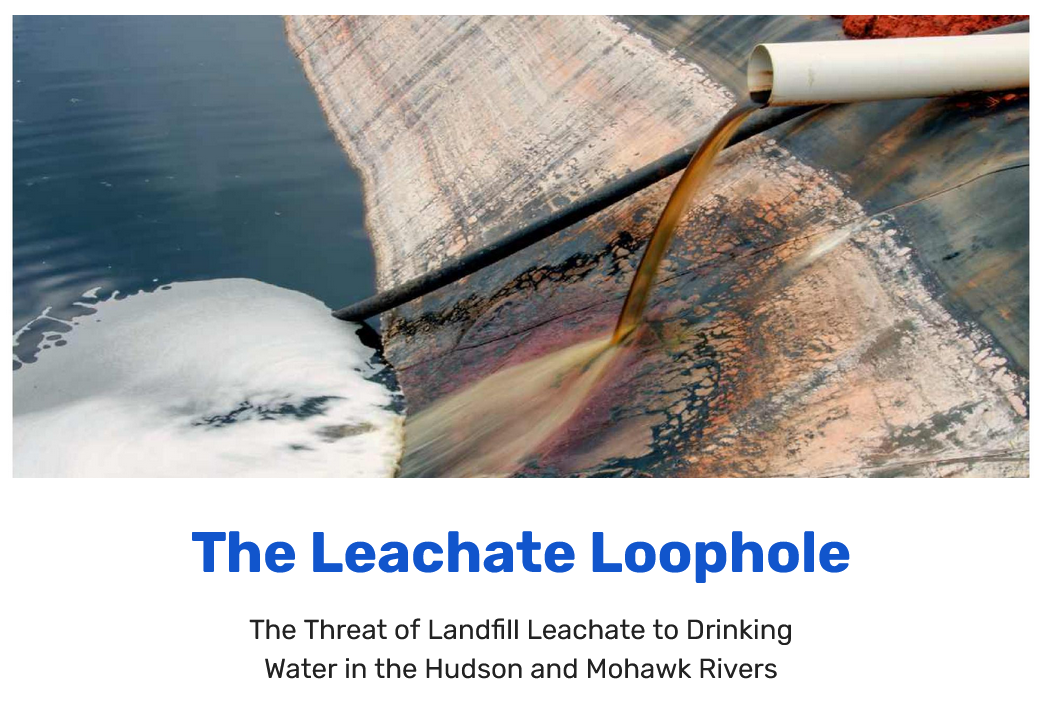
Industrial waste is not gone from our rivers. It’s just hidden.
The “Leachate Loophole” is a set of regulatory gaps that allow the Hudson and Mohawk Rivers to be polluted by landfill leachate – the toxic liquid that is created as water percolates through landfills.
The Leachate Loophole involves multiple environmental laws, including those that cover solid waste, surface water, and drinking water. Modern landfills must take extensive measures to contain leachate in order to protect neighboring groundwater and streams. Yet, once this leachate is collected, it is common practice to send it to municipal wastewater treatment plants (WWTPs) for disposal. WWTPs are not required to remove the harmful substances that are present in leachate, and they are not equipped to do so, even where they discharge into drinking water sources. The burden to remove harmful chemicals is placed on the drinking water treatment plants that draw from these waters, whose operators may not be aware that neighboring WWTPs are accepting leachate.