Seneca Meadows and the Communities Paying the Price for New York’s Garbage
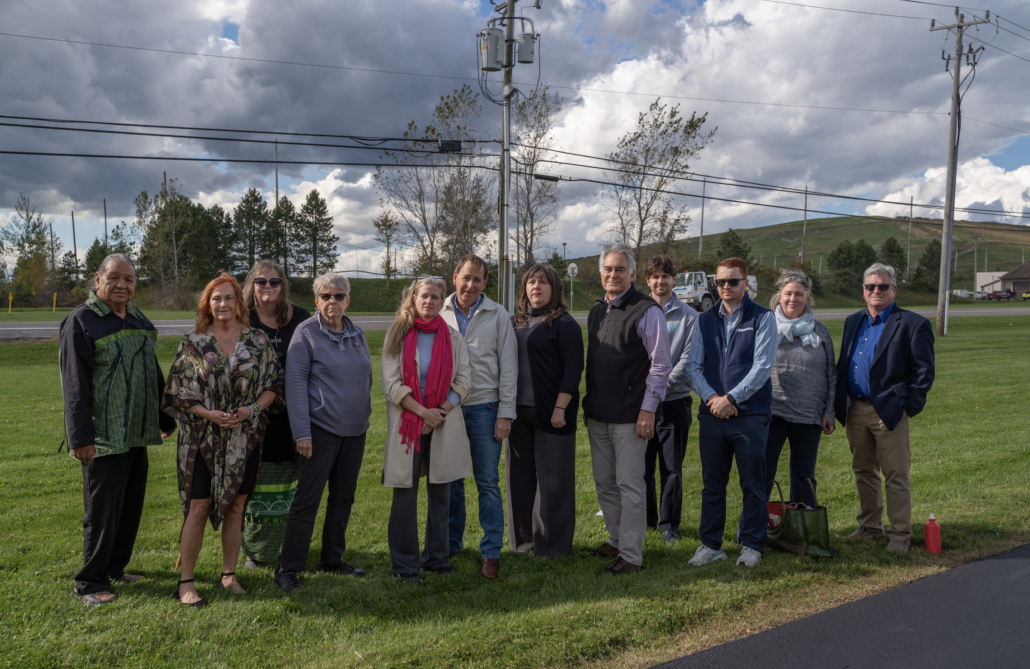
Sachem Sam George of the Gayogohó:nǫ (Cayuga) Nation; Yvonne Taylor, Co-Founder and Vice President of Seneca Lake Guardian; Debbie George, wife of Chief Sam George; Beth Gallagher, Assemblymember Emily Gallagher’s mother; Assemblymember Anna Kelles; Doug Avery, former Member of the Seneca Falls Town Board; Assemblymember Emily Gallagher; Assemblymember Al Stirpe; Jackson Marko, Legislative Coordinator; Mark Pitifer, Marketing & Communications Administrator, Government & Public Relations at Waterloo Container; Rebecca Martin, New York River Watch; Joseph Campbell, Co-Founder and President of Seneca Lake Guardian. Seneca Meadows in the background
By Rebecca Martin, New York River Watch
Click the links throughout the post to watch video footage from the site.
Last week, I traveled 224 miles from my home in Kingston, NY to Seneca Falls and Waterloo to tour Seneca Meadows Landfill, organized by our partners at Seneca Lake Guardian. As co-founder and lead organizer of New York River Watch, I wanted to see firsthand the landfill at the center of so many concerns about waste, pollution, and public health in New York State. What I saw, and what we heard from the people who live and work nearby, reinforced why this issue matters far beyond the Finger Lakes.
Seneca Meadows is New York State’s largest active landfill, but the word landfill hardly conveys its scale. The site spans 2,600 acres, including nearly 400 acres of landfill, and rises roughly 300 feet above the surrounding landscape. From a distance, its towering mass looks more like a mountain range than a garbage dump.
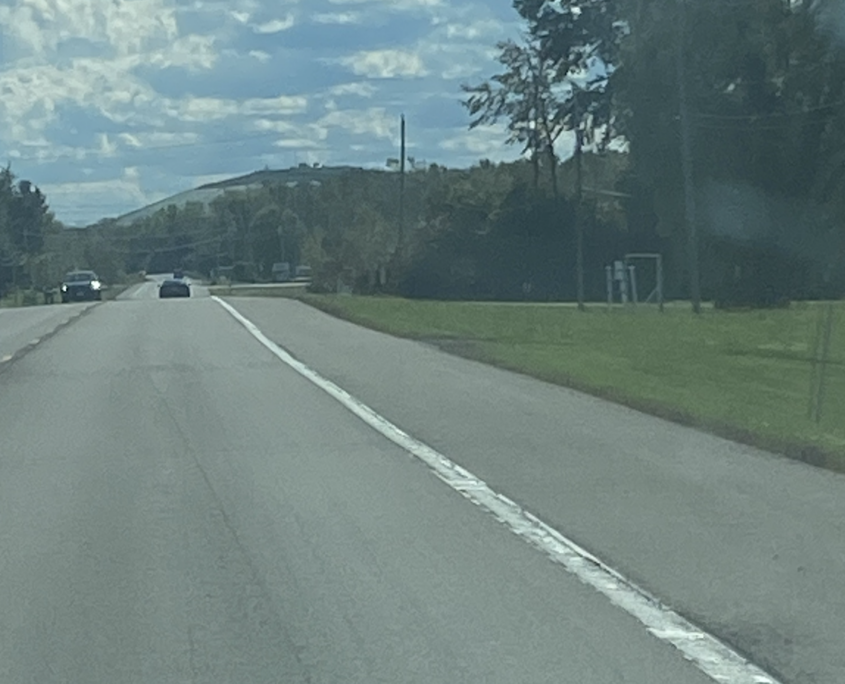
Driving toward Seneca Meadows Landfill after exiting the highway. With Waste Connections’ billion-dollar profits, they can make a mountain of garbage look almost like a natural mountain. But the stench gives it away.
Waste disposal at the site dates back to 1958, when it operated as a local dump. In 1983, it became Seneca Meadows, marking the beginning of the operation we know today.
Owned by Waste Connections, Seneca Meadows accepts approximately 6,000 tons of garbage daily from about 47 New York counties, as well as other states and Canada. A substantial amount comes from New York City. Communities hundreds of miles away, including my own in Ulster County, send their waste here.
The 16,000 people who live in Seneca Falls and Waterloo, NY, are left to bear the consequences of a waste system that sends garbage from across the state to their doorstep, turning their communities into sacrifice zones for everyone else’s convenience.
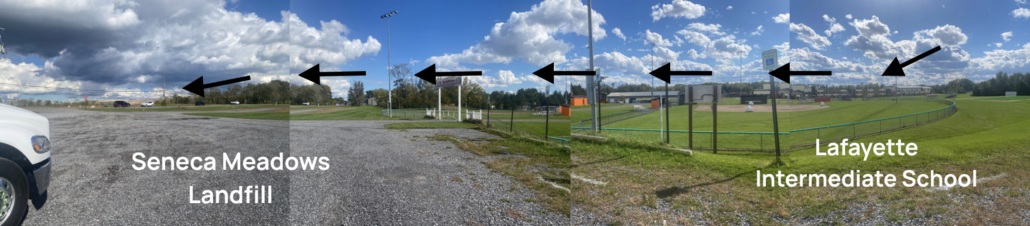
The landfill’s footprint is enormous, but its impacts extend well beyond its boundaries. Homes, businesses, schools, and historic sites sit nearby. Lafayette Intermediate School is approximately half a mile away as the crow flies, and six school buildings in the Waterloo and Seneca Falls school districts are within three miles, according to information shared during our tour.
We also learned that Waste Connections had purchased many homes around the landfills perimeter. Some stood abandoned; others remained occupied by people living with its daily impacts, likely not having any options. For families who may have lived here for generations, losing a home can mean losing a piece of their family history, their community, and their way of life. When Waste Connections buys their homes, residents who remain may find themselves in a more vulnerable position, living in homes they no longer own while the company that owns them has a direct stake in local decisions. That shift in power may make residents less willing to speak out at Town Hall about the impacts of the landfill on their lives, and their community.
There is a certain shrewdness in buying properties after a landfill has diminished their value, especially for a corporation that reported more than $1 billion in net income in 2025.
Seneca Meadows’ permit was set to expire at the end of 2025. Waste Connections has applied for a 15-year expansion, known as the “valley infill” project, that would allow the landfill to continue operating through 2040. But that timeline may be far longer. The 15-year clock would not begin until new permits are issued, if they are issued at all. That could mean Seneca Meadows continues operating until 2050 or beyond.
Or until it reaches capacity. During my afternoon visit, truck traffic into the landfill seemed surprisingly light. Community members told us the company was limiting truckloads to slow the landfill’s approach to capacity while awaiting a permit decision.
Meanwhile, the NYS Department of Environmental Conservation has not released the environmental impact statement for public comment, leaving the community in limbo while the expansion review continues. The proposal has drawn strong opposition from community members and environmental groups, including our allies at Seneca Lake Guardian.
Living in the shadow of a landfill
Community members described persistent odors and concerns about air quality. Nearby businesses have reported difficulties attracting and retaining employees because of the smell. I experienced it firsthand as I drove around Seneca Falls and Waterloo, on my way to the sewage treatment plant and the community center where a town hall would be held.
Like hitting a warm current in a cold lake, the stench would find me without warning, filling the air before receding as I drove on. I began to notice where it struck: beside homes, along farmland, near playgrounds. And then there was the landfill’s perimeter misting system, spraying an odor-control product into the air in an apparent attempt to mask the stench, while likely adding to the ghastly soup of chemicals in the air.
Even with a steady breeze, the smell was overpowering near the leachate holding tanks. More than a million gallons of “garbage water” sat in these tanks waiting to be trucked away. Just beyond them stood a willow tree, a quiet remnant of the landscape that existed before Seneca Meadows opened in the 80’s. The willow stood as a reminder of the natural landscape that the landfill replaced.
I grew up in a Maine mill town where the paper mill’s stench hung over the community day after day. People called it “the smell of money,” as if the jobs justified the pollution. Driving through Seneca Falls and Waterloo, I thought about that phrase differently. Seneca Meadows employs an estimated 100–160 people while taking communities’ garbage from across the state and beyond for profit. As horrible as my hometown’s paper mill was, it employed thousands of families. Neither industry has a license to pollute, but the economic benefits are hardly comparable to the burden. What has Waste Connections actually brought these communities to justify decades of living with a mega-landfill?
An educational center where no-one goes!

The public health concerns go far beyond odor. From 2019 to 2023, Seneca County’s age-adjusted lung cancer incidence rate was 70.7 cases per 100,000 people per year, about 36% higher than the national rate. A separate state review also found elevated lung cancer diagnoses in specific census tracts in Seneca Falls and Waterloo over a 26-year period.
We need a different approach to waste
“Out of sight, out of mind” has become New York’s waste management strategy. We send our garbage elsewhere and leave other communities to live with the consequences. Massive landfills like Seneca Meadows and Colonie in New York State are not solutions; they are symptoms of a failed system.
If we all spent a week living beside a large garbage dump like Seneca Meadows and experiencing its scale, the stench, and the losses borne by the surrounding community, we might stop treating mega-landfills as an acceptable solution to our waste.
We need mandated zero-waste planning backed by dedicated funding for coordinated implementation. Above all, local governments, businesses, and community members must work together to reduce its waste, expand reuse and recycling, and make landfills, when necessary, the absolute last resort.
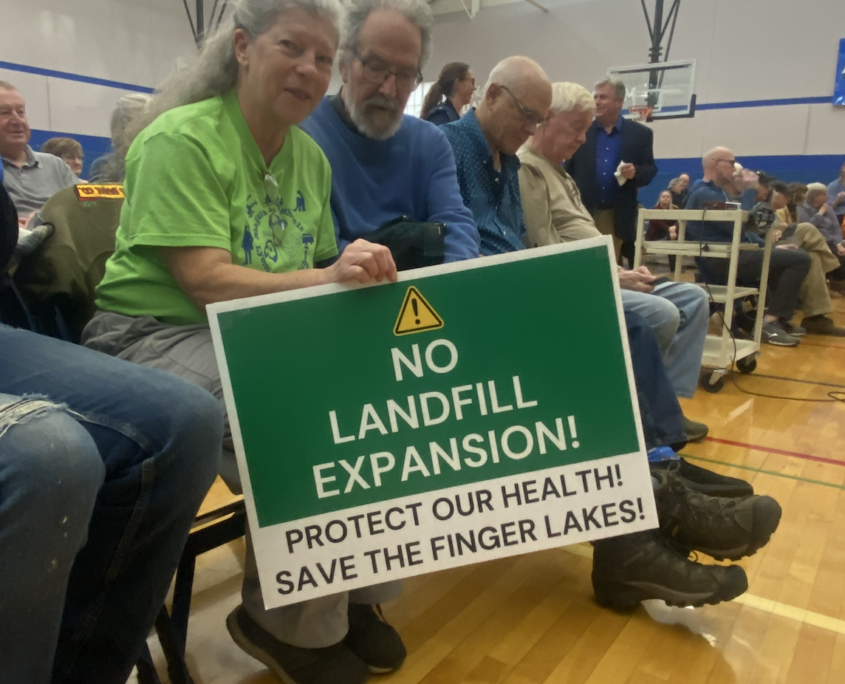
TAKE ACTION
- Sign up for Seneca Lake Guardian’s mailing list. Sign up for Seneca Lake Guardian’s mailing list now so you’re ready when public comment opens on Waste Connections’ proposed expansion of Seneca Meadows. They will make it easy to personalize and submit a comment. We need thousands of voices saying: No more mega-landfills. Close Seneca Meadows.
- Tell your state legislators to implement New York’s Zero Waste Plan. New York adopted its 2023–2032 Solid Waste Management Plan, but a plan on paper means little without action. Urge your New York State senators and assemblymembers to prioritize waste reduction, reuse, recycling, and composting—and stop expanding our dependence on landfills and incineration.
- Visit New York River Watch’s Leachate Loophole campaign. Learn how landfill leachate threatens our waterways and drinking water, and find out how you can take action to close the loophole.